While Tongyeong oysters are a common seafood item in winter, many are unaware of the specific reasons why Tongyeong is renowned as an oyster production area. This reputation is linked not only to the oyster farming methods but also to the environmental conditions of the production waters and the local distribution structure.
Tongyeong has developed suspension culture, a method where oysters are suspended in the sea. Oysters grow by filtering food organisms from the seawater and are supplied after harvesting through local auctions, sorting, and processing.
To understand these characteristics of Tongyeong oysters, we will examine everything from the principles of suspension culture and the management of production waters to the peak season and shipping periods, the meaning of the first auction ceremony, and the processing and distribution after local auctions.
Reasons for Tongyeong Oysters’ Fame and Characteristics of the Production Area
Tongyeong is a major production area on the southern coast of Gyeongnam Province, where oyster aquaculture is highly developed. The region hosts not only oyster farms but also shucking facilities for removing oyster shells, local wholesale markets, and processing plants.
The co-location of oyster farms and related facilities in the production area illustrates Tongyeong’s integrated production and distribution structure.
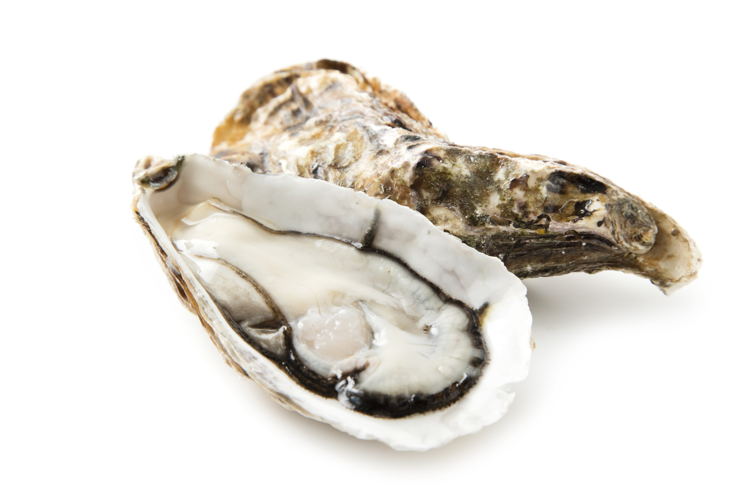
Principles and Production Process of Tongyeong Oyster Suspension Culture
Suspension culture is a method where buoys are floated in the sea, and lines with young oysters attached are connected beneath them, extending deep into the seawater. The growth environment for oysters varies depending on water temperature, the amount of food organisms, and water flow during their development.
Facility Structure and Oyster Growth in Suspension Culture
Oyster farming begins with spat collection preparation, securing young oysters, and managing the spat, followed by the suspension and cultivation process in the sea, leading to harvesting.
| Stage | Key Task |
| Spat Collection Preparation | Prepare attachment devices, such as oyster shells, for oyster larvae to settle on. |
| Spat Collection | Secure young oysters by allowing oyster larvae to attach to the attachment devices. The process varies depending on the method, such as natural or artificial spat collection. |
| Hardening and Spat Management | Manage the attachment devices with young oysters to prepare spat for full-scale cultivation. During the hardening process, spat may be managed by utilizing exposure due to tides. |
| Suspension | Connect the attachment devices with young oysters to suspension lines and hang them in the sea using facilities like buoys. |
| Cultivation | Cultivate oysters in the sea, monitoring their growth status and the farm environment. The cultivation period may vary depending on the spat collection time and farm conditions. |
| Harvesting | Pull up the suspension lines with fully grown oysters and harvest them. They can then be shipped in the shell or shucked and supplied as oyster meat. |
Differences Between Suspension Culture and Intertidal Culture
Unlike suspension culture, intertidal culture takes place in an environment where oysters are submerged or exposed to air depending on the tides. The main differences between the two methods are shown in the table below.
| Category | Suspension Culture | Intertidal Culture |
| Farming Location | Waters with consistent depth | Mudflats/rocky areas submerged at high tide and exposed at low tide |
| Time Submerged in Water | Submerged for most of the cultivation period | Submerged at high tide, exposed to air at low tide |
| Facility Structure | Oysters are suspended using buoys and suspension lines | Oysters are attached to rocks or stakes for cultivation |
| Food Intake | Filter-feed on food organisms in the water | Food intake is restricted when exposed to air at low tide |
Tongyeong Oyster Production Waters and Designated Shellfish Production Areas
Designated Shellfish Production Areas for Export refer to areas that produce shellfish for export and are managed according to the hygiene standards of importing countries. The primary purpose is to regularly investigate the hygienic status of the waters and manage surrounding pollution sources.
According to data released by the Ministry of Oceans and Fisheries in June 2018, there were a total of 7 designated shellfish production areas for export in Korea at that time. Among these, the Hansan-Geojeman, Jaran-Saryangdo, and Mireukdo waters near Tongyeong are designated for oyster export. The areas below are also based on the 2018 announcement and do not necessarily represent current boundaries and sizes.
| Designated Area | Designated Area (ha) | Export Species |
| No. 1 Hansan-Geojeman Waters | 2,050ha | Oyster |
| No. 2 Jaran-Saryangdo Waters | 9,492ha | Oyster |
| No. 3 Mireukdo Waters | 3,107ha | Oyster |
Since designated production areas have defined boundaries, not all Tongyeong oyster farms are included.
Purpose and Hygiene Management of Designated Shellfish Production Areas
In designated shellfish production areas, surrounding pollution sources and the hygienic conditions of oyster processing plants for export are inspected. Key inspection targets include sewage treatment plants, public restrooms near the sea, and aquaculture facility management.
The U.S. Food and Drug Administration (FDA) conducts on-site inspections of domestic shellfish production areas and processing facilities in accordance with the Korea-U.S. Shellfish Sanitation Agreement. In April 2023, on-site inspections were carried out for the Hansan-Geojeman and Jaran-Saryangdo waters, and in June of the same year, the validity period of the Korea-U.S. Memorandum of Understanding on Export Shellfish Sanitation Management was extended until June 15, 2028.
However, the hygiene management of designated areas does not guarantee the safety of individual oyster products. Post-harvest washing, processing, and storage must be managed separately.
Characteristics of Tongyeong Oyster Peak Season and Shipping Period
Tongyeong Oyster Peak Season and Shipping Period
Oysters typically spawn in summer, and their flesh begins to plump up again from autumn as water temperatures drop. This marks the beginning of full-scale fresh oyster shipments, and they are generally known as a seasonal seafood from autumn to winter. However, the actual harvesting and shipping periods can vary depending on water temperature changes, oyster growth status, and marine environmental factors such as typhoons.
Supply Methods for Fresh and Frozen Oysters
Fresh oysters are distributed refrigerated, so they are affected by the harvesting and shipping seasons. In contrast, oysters that are quick-frozen or cooked and then frozen can be used as ingredients even after their peak season.
| Category | Processing Method |
| IQF Shucked Oysters | Individually quick-frozen shucked oyster meat. |
| Cooked Frozen Oysters | Oysters cooked in the shell or shucked, then frozen. |
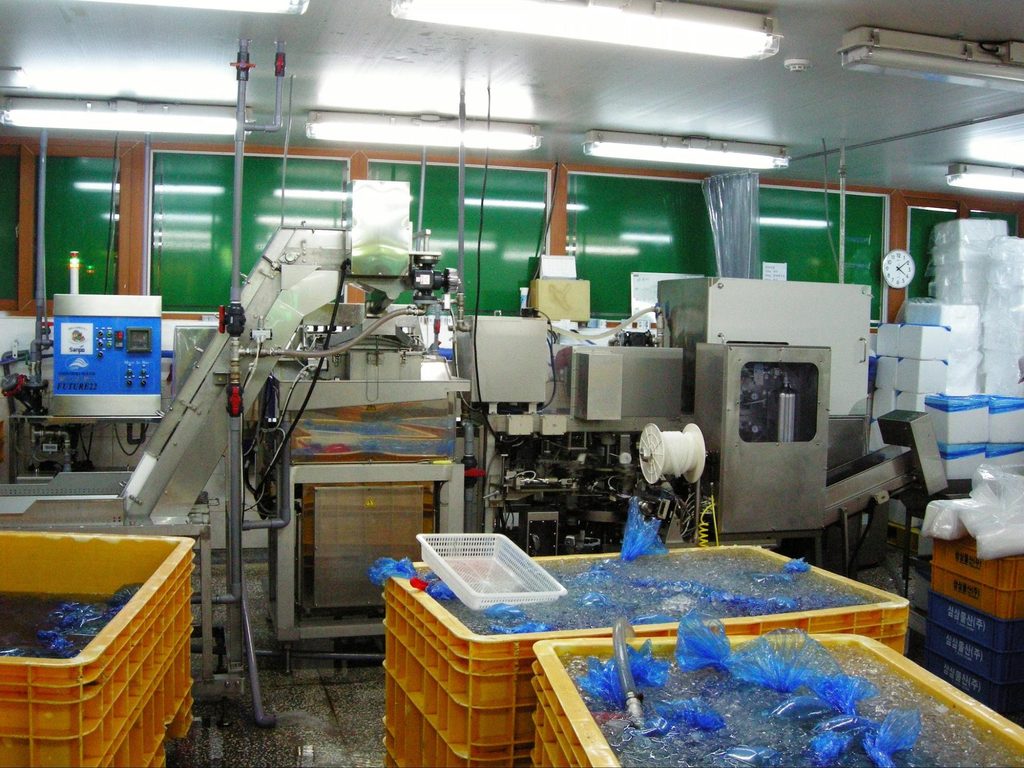
Cooked frozen oysters can be processed by cooking them in the shell and then shucking, or by cooking shucked oyster meat and then freezing it. Samsam Moolsan uses the method of cooking shucked oyster meat before freezing.
Frozen oysters must be stored at -18℃ or below, and the product’s expiration date should be checked on the packaging.
Tongyeong Oyster First Auction Ceremony and the Role of the Oyster Suspension Culture Fisheries Cooperative
Meaning of the Oyster First Auction Ceremony and the Start of Local Auctions
‘Chomae’ (初賣) means ‘first sale.’ The Tongyeong Oyster First Auction Ceremony is an event held at the Oyster Suspension Culture Fisheries Cooperative’s wholesale market to commemorate the first auction of the new shipping season. The date varies each year and does not signify the first harvest day for all farms.
Role of the Oyster Suspension Culture Fisheries Cooperative and Fresh Oyster Auctions
The Oyster Suspension Culture Fisheries Cooperative is a fisheries cooperative whose members are oyster farming fishermen. It operates fresh oyster wholesale and auctions at its market in Yongnam-myeon, Tongyeong-si. During the shipping season, shucked oyster auctions are held about 4-5 times a week, where producers’ oysters are purchased by intermediate wholesalers through auction.
Tongyeong Oyster Local Auction and Samsam Moolsan’s Distribution and Processing
Raw Material Purchase and Supply After Tongyeong Oyster Auction
Tongyeong oysters that have passed through the local wholesale market auction can be supplied through the following process. However, not all Tongyeong oysters are distributed via this route.
| Stage | Responsible Party | Key Task |
| Harvesting/Shucking | Aquaculture Fishermen | Harvest oysters and ship them in the shell or proceed with shucking |
| Wholesale/Auction | Oyster Suspension Culture Fisheries Cooperative | Conduct wholesale and auction of shipped oysters |
| Raw Material Purchase | Intermediate Wholesalers | Participate in auctions and purchase oysters |
| Sorting/Processing/Packaging | Processing Companies | Sort, wash, freeze, cook, and package according to product type |
| Distribution/Supply | Processing/Distribution Companies | Supply to large supermarkets, catering/food service companies, or export |
Intermediate Wholesaler No. 33 Samsam Moolsan’s Participation in Tongyeong Oyster Auctions
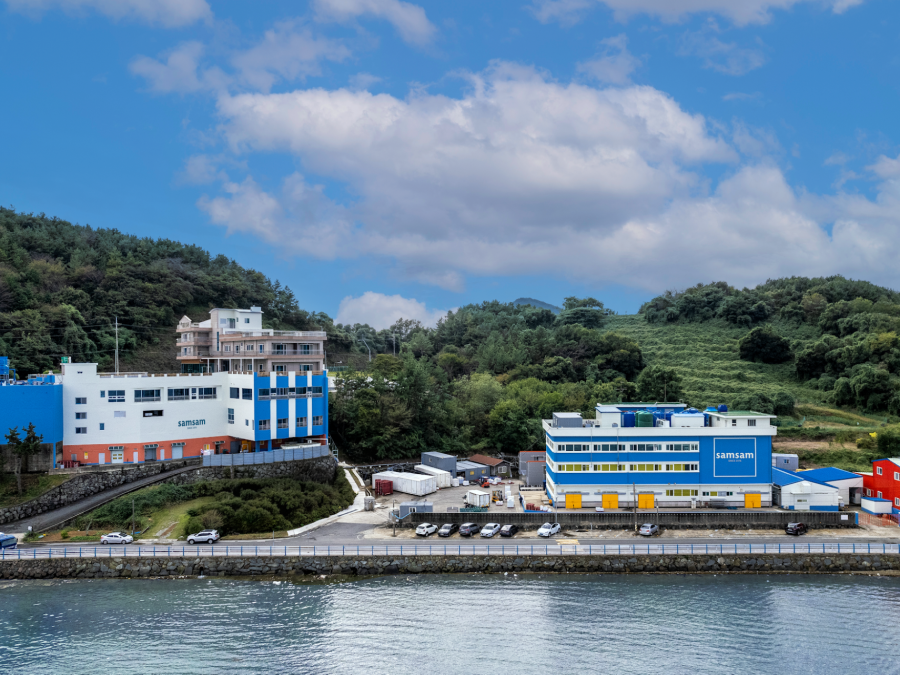
Samsam Moolsan began operations in Tongyeong in 1976 and joined the Chungmu Branch of the Diver’s Fisheries Cooperative as Intermediate Wholesaler No. 33 in 1979, and the Tongyeong Fisheries Cooperative in 1988. Currently, as Intermediate Wholesaler No. 33, it participates in Tongyeong oyster auctions to purchase raw materials. According to Samsam Moolsan’s official company profile, CEO Yoo Tak-kwan received the Excellent Intermediate Wholesaler Award at the Oyster Suspension Culture Fisheries Cooperative’s First Auction Ceremony in October 2025.
Samsam Moolsan’s Oyster Washing and Product-Specific Processing
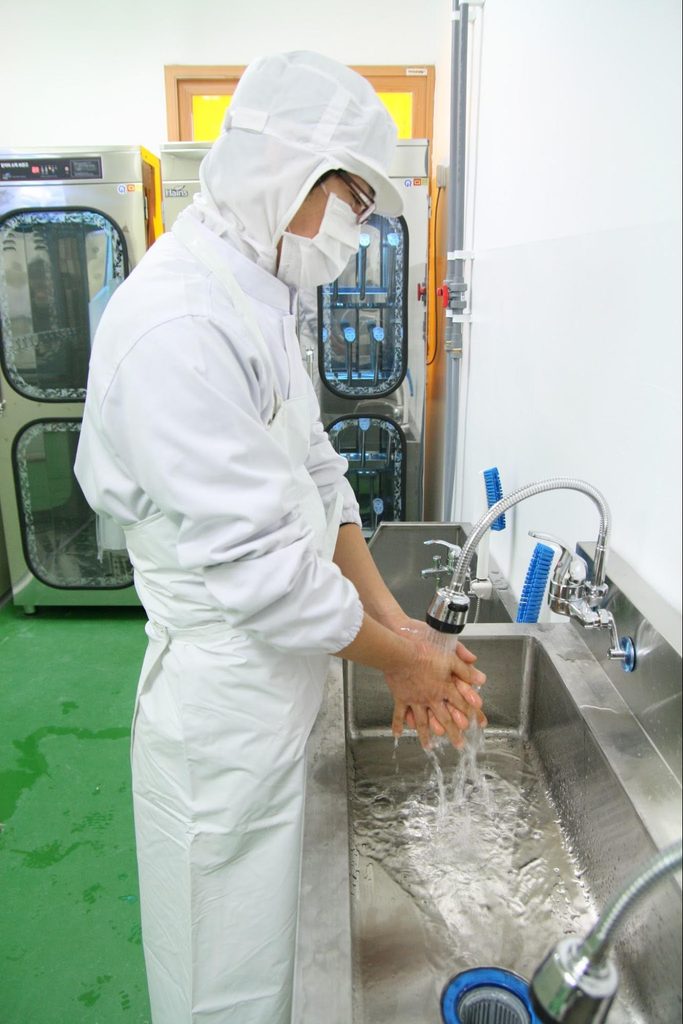
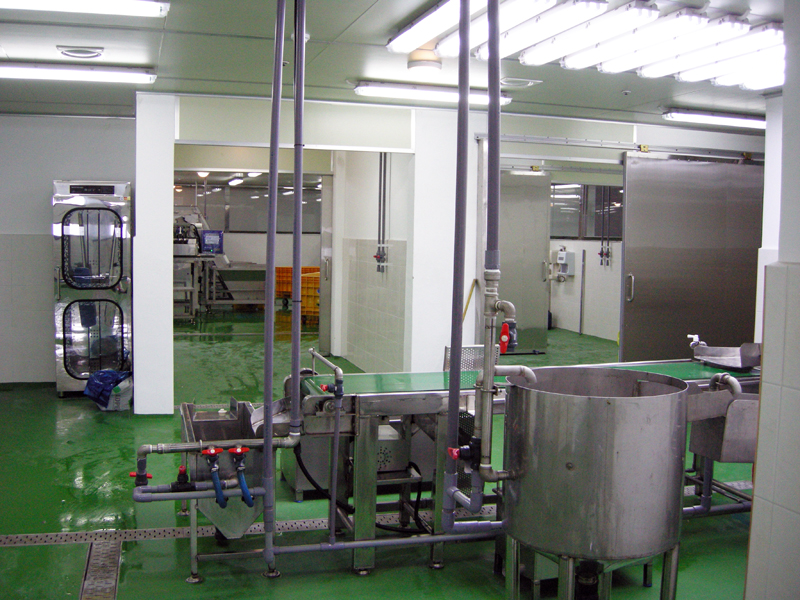
Samsam Moolsan operates a 4-stage washing line for sorting and cleaning oysters, using seawater drawn from the open sea for processing. The chilled seawater is maintained at 7℃.
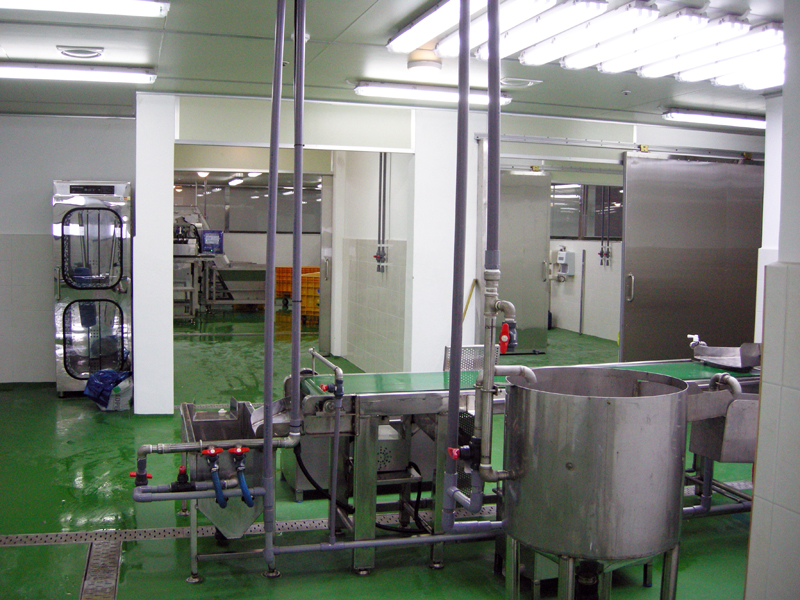
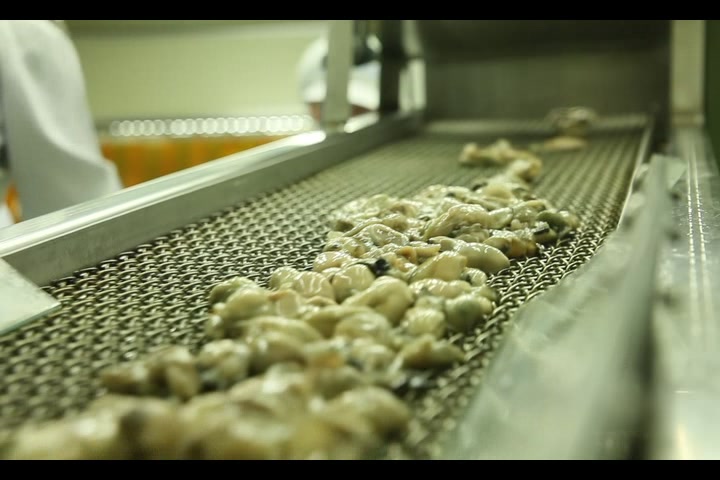
After washing, oysters are processed differently depending on the product type. Fresh oysters are small-packaged and shipped refrigerated, while IQF shucked oysters are individually quick-frozen and then glazed with a thin layer of ice. Cooked frozen oysters are shucked, cooked, and then frozen. This processing utilizes individual quick-freezing equipment and cooked product belt lines, among others.
Frequently Asked Questions about Tongyeong Oysters
Do Tongyeong oysters taste better than oysters from other regions?
It is difficult to compare the taste and texture of oysters based solely on their origin. Differences can arise depending on the feeding environment of the waters where the oysters grew, the harvest season, and post-harvest storage conditions.
Are all suspension-cultured oysters from Tongyeong?
No. Suspension culture is an oyster farming method used not only in Tongyeong but also in other regions along the southern coast. The origin must be verified by checking the origin labeling on the product.
Are all oyster farms in Tongyeong located in designated production areas?
No. Designated production areas have defined boundaries, so it is necessary to verify whether individual farms are included.
Can oysters from designated shellfish production areas be eaten raw?
Not all oysters produced in designated shellfish production areas can be eaten raw. When purchasing oysters, check the product labeling for ‘raw consumption’ or ‘for cooking,’ and oysters labeled ‘for cooking’ must be thoroughly cooked before consumption.
Is the oyster first auction ceremony held on the same day every year?
The oyster first auction ceremony is generally held between mid-October and late October, but the exact date can vary each year. The schedule for the current year can be confirmed through announcements from the Oyster Suspension Culture Fisheries Cooperative.
Do all Tongyeong oysters go through the Oyster Suspension Culture Fisheries Cooperative auction?
It cannot be assumed that all Tongyeong oysters are distributed through the same channel. The Oyster Suspension Culture Fisheries Cooperative’s wholesale market auction is a local auction where fresh Tongyeong oysters are traded. Oysters successfully bid on here are supplied through intermediate wholesalers and processing companies, tailored to the product form.
References
National Institute of Fisheries Science, Press Releases on Oyster Aquaculture
Ministry of Oceans and Fisheries, What is a ‘Designated Shellfish Production Area for Export’?
Ministry of Oceans and Fisheries, 2023 Korea-U.S. Shellfish Sanitation On-site Inspection
Ministry of Oceans and Fisheries, Extension of Korea-U.S. Memorandum of Understanding on Export Shellfish Sanitation Management
Samsam Moolsan, Company Introduction and History
Samsam Moolsan, Production Facilities of Factories 1 & 2 and IQF/Cooked Product Equipment