Oyster & Seafood Glossary
GLOSSARYTerms that appear on product sheets and purchase orders but are rarely explained anywhere. We keep adding entries.
Quick Freezing: Relationship with Slow Freezing and IQF
Quick freezing is a process that removes heat to rapidly pass a product through the temperature range where ice crystals intensively form as it freezes. To assess how quickly a product was frozen, you need not only the freezer’s setpoint but also time-temperature records from the product’s core and specific freezing conditions for each product.[1][2]
IQF (Individually Quick Frozen) is a method of rapidly freezing small products so they don’t stick together, encompassing both individual separation and quick freezing.
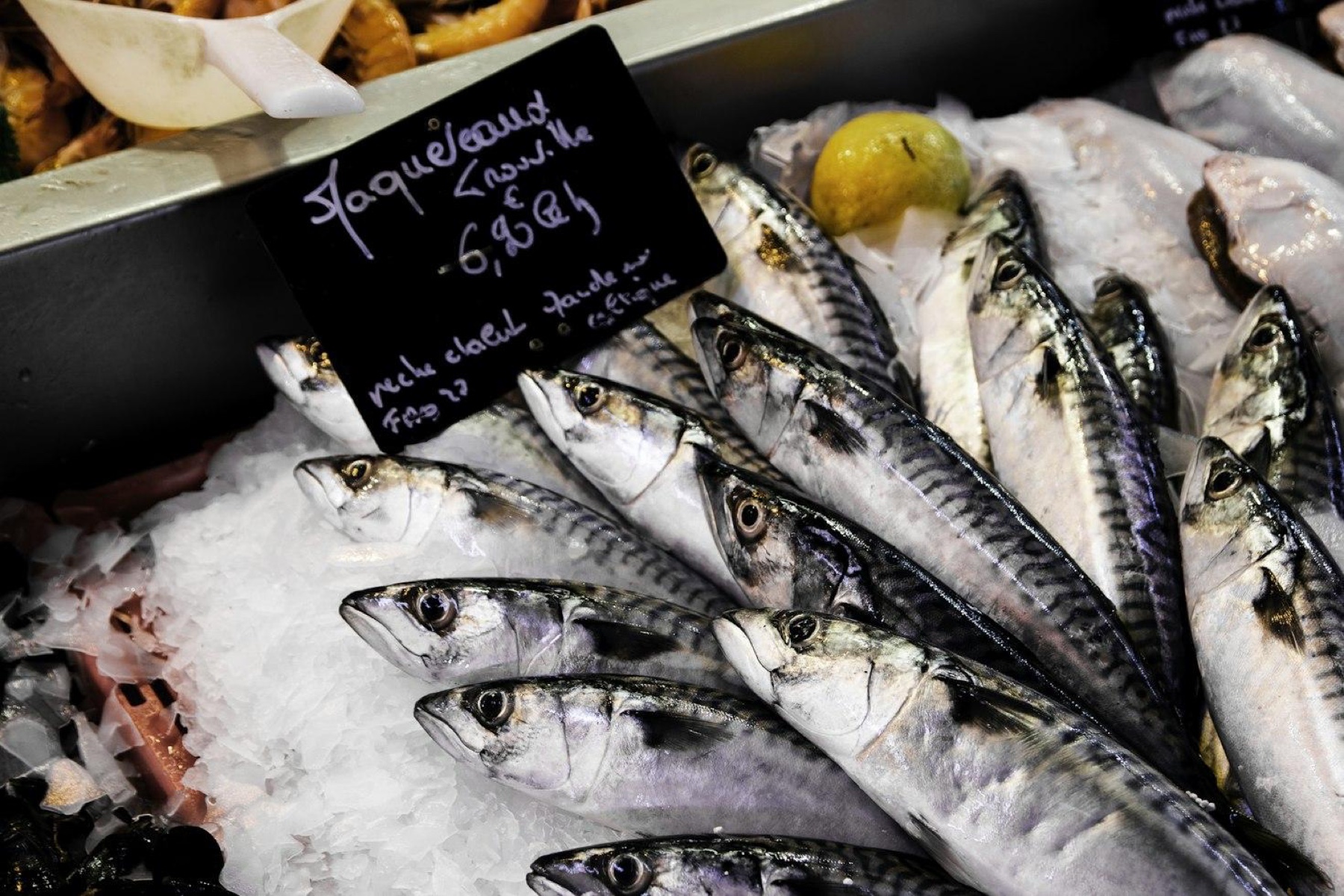
Example of seafood handled on ice. Freezing methods are distinguished by product specifications and records. This is a stock photo for illustrative purposes and does not prove Samsam Mulsan’s products, facilities, certifications, or Korean origin of raw materials.
Photo: Samuel C. / Unsplash · License
Criteria for Distinguishing Quick Freezing and Slow Freezing
If freezing is slow, ice crystals tend to grow larger, which can increase tissue damage and drip loss upon thawing. Rapid freezing favors the formation of smaller crystals but does not improve low-quality raw materials or eliminate all microorganisms.[1]
|
Category |
Quick Freezing |
Slow Freezing |
|
Key Criterion |
Rapid passage through the maximum ice crystal formation zone |
Relatively long dwell time in this zone |
|
Verification Data |
Product core time-temperature, loading conditions |
Longer freezing time under identical conditions |
|
General Quality Trend |
Favorable for reducing tissue damage and drip loss |
Increased potential for large crystals and drip loss |
To compare these differences, you must consider product size, initial temperature, loading quantity/thickness, airflow, packaging, and freezing time, along with core temperature records. The Codex Standard for Quick Frozen Fish Fillets distinguishes between rapid passage through the maximum ice crystal formation zone and maintaining a frozen state after freezing.[2] For oyster products, verify the specifications, labeling, and application standards for the relevant SKU, and do not determine quick freezing solely by the final temperature.
IQF considers both individuality and quick freezing.
You cannot call a product IQF simply because it was frozen quickly. IQF refers to products that are quickly frozen as individual units. Even if oyster meat is quickly frozen, if it forms a single block in a container, it may be block frozen.
|
Question |
What Quick Freezing Answers |
What IQF Additionally Answers |
|
Process |
Was the product frozen quickly? |
Were individual units frozen quickly? |
|
Usability |
No separate meaning |
Is it easy to take out only the required quantity? |
|
What it Does Not Answer |
Heating status, safety use, origin |
Heating status, safety use, glazing |
An IQF label does not certify whether a product is suitable for raw consumption, whether it is cooked, its origin, or its glaze percentage. When choosing a freezing format, you can refer to the difference between IQF and block freezing, and when determining order items, refer to the criteria for selecting frozen oysters.
Connect Freezing and Storage Records by Lot
Request information on raw material condition, pre-freezing temperature, individual unit size, loading quantity/thickness, equipment air conditions, freezing time, core time-temperature, pre-packaging exposure, and frozen storage records. Also compare drip loss, individual separation, clumping, and weight changes for the same lot. Even if the quick freezing process is appropriate, significant temperature fluctuations in the cold chain can lead to recrystallization and quality changes.
When inquiring about supply from Samsam Mulsan, please inform us of the required product form/size, monthly usage, packaging unit, on-site storage conditions, and any freezing/storage data that needs verification. Actual supply specifications and transaction terms must be confirmed upon inquiry.
Frequently Asked Questions
Is quick freezing a sterilization process?
No. While rapid freezing can be beneficial for quality preservation, it does not eliminate all microorganisms. Separately verify suitability for raw/cooked consumption and cooking conditions.
Are IQF and quick freezing the same thing?
No, they are not. Quick freezing is a process of rapidly passing through the ice crystal formation zone, while IQF additionally includes individual separation. Block products can also be quick-frozen.
Is it sufficient to only check the freezer’s set temperature and the final product temperature?
It is not sufficient. The fact that the final temperature was reached and the speed at which the maximum ice crystal formation zone was passed are different items. You should also examine the product’s core time-temperature and the loading/operating conditions.
Does quick-frozen product mean there will be no quality changes during storage?
No. If temperature fluctuations occur after freezing, recrystallization and quality changes can happen, so storage and transportation history must be managed separately.
What freezing and storage data should I request from a supplier?
Request raw material and product size, pre-freezing temperature, loading and air conditions, freezing time, core records, pre-packaging exposure, storage history according to product-specific standards, and thawing results by lot.
Sources and Verification Criteria
[1] FAO, Chapter 1 Introduction to Freezing
https://www.fao.org/4/y5979e/y5979e03.htm
Freezing rate and ice crystal size, tissue damage from slow freezing, concept of fluidized bed IQF · Date of verification 2026-09-27
[2] Codex Standard for Quick Frozen Fish Fillets, CXS 190-1995
https://www.fao.org/input/download/standards/115/CXS_190e.pdf
Rapid passage through the maximum crystal formation zone, core temperature, and principles of frozen distribution and packaging · Date of verification 2026-09-27