Oyster & Seafood Glossary
GLOSSARYTerms that appear on product sheets and purchase orders but are rarely explained anywhere. We keep adding entries.
How Do Shellfish Depuration, Seawater Treatment, and Shucked Oyster Meat Washing Differ?
Shellfish depuration, seawater treatment, and shucked oyster meat washing are processes with different targets and records. If all of these are referred to simply as “seawater purification,” it becomes difficult to ascertain which raw materials underwent which treatment, potentially leading to misjudgment of management effectiveness.[1]
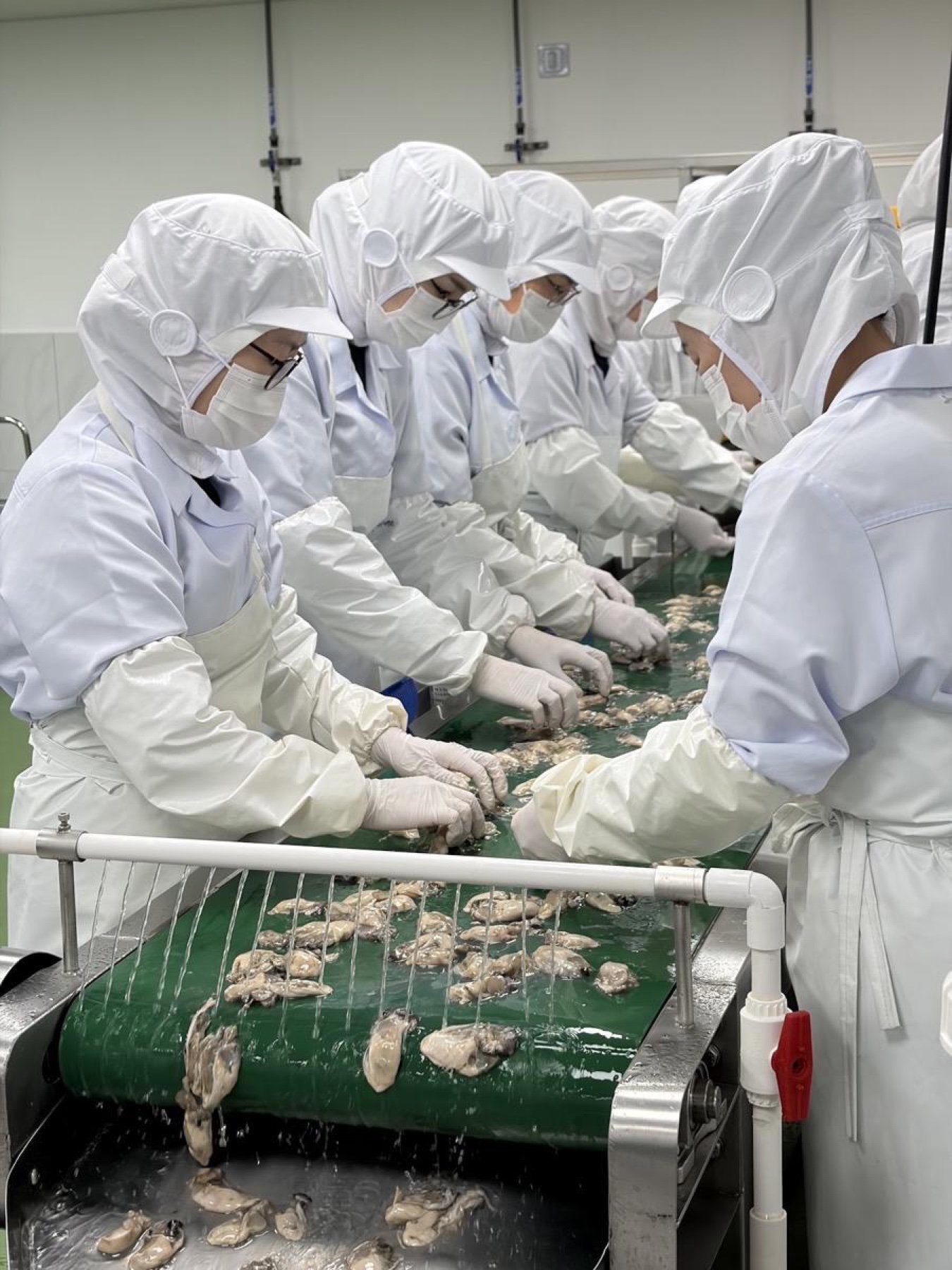
Washing stage in the Eoriguljeot (salted fermented oysters) manufacturing process, provided by Samsam Moolsan. This is an example of a process handling shucked oyster meat, distinct from the depuration of live shellfish.
Photo courtesy of Samsam Moolsan · Original image provided by the company
Distinguishing the targets and documentation for the three processes
|
Category |
Target of Treatment |
Primary Purpose |
Operational Data to Verify |
|
Shellfish Depuration |
Live Oysters/Clams |
Elimination/Reduction of Some Microbial Contamination |
Raw material lot, tank, water temperature/salinity/oxygen, time, loading, water flow |
|
Seawater Treatment for Processing |
Intake Seawater |
Management of Process Water Suitability (e.g., wash water, tank water) |
Intake source, filtration/UV/ozone, water quality, equipment operation |
|
Shucked Oyster Meat Washing |
Shucked Oyster Meat |
Removal of Sand, Mud, Shell Fragments |
Wash water, contact time, sorting, drainage, weight |
Depuration utilizes the filtration and excretion activities of live shellfish, thus requiring management of the tank environment. While treated seawater can be supplied to the tanks, water treatment records alone cannot prove the completion of oyster depuration. Shucked oyster meat does not filter, so washing is not depuration. For information on which stages apply to which products, refer to the Oyster Processing Process Branching Guide and verify with actual process flow diagrams.
Depuration is applied within official management and raw material eligibility.
Codex distinguishes between direct harvesting from approved areas and, if necessary, relaying or depuration under the control of the competent authority.[2] Depuration does not permit the distribution of raw materials with unclear origins or those not approved for use. Please verify the production area, raw material lot, applicable SKU, depuration conditions, and release judgment together.
Reflect Removal Limitations in Use and Labeling
Depuration can reduce many fecal bacteria but is less effective against Norovirus and Hepatitis A virus. It may also have inconsistent or ineffective removal effects on marine Vibrio, shellfish toxins, heavy metals, and organic chemicals.[1] Similarly, UV seawater treatment does not guarantee that all hazards in oyster tissue have been eliminated.
To compensate for these limitations, it is necessary to consider production area control, harvesting restrictions, raw material/lot verification, cold chain distribution, labeling for intended use, and necessary heating. Norovirus monitoring in production areas and labeling for cooking purposes are also origin management practices operated separately from depuration.[3] When reviewing hazards and records at each stage, you can refer to The Role of Seafood HACCP.
Verify Supply Descriptions with Records
- Is it live shellfish depuration, process water treatment, or oyster meat washing?
- Which raw materials and SKUs are applied, and what is the scope of official management?
- What are the batch start/end, tank conditions, or equipment operation records?
- Are wash water, sorting/drainage, and weight records linked to the lot?
- How are the removal limitations for viruses, Vibrio, toxins, and heavy metals indicated?
Review supply descriptions using flowcharts, results, and deviation actions. Do not rely solely on equipment photos or UV treatment statements. For oyster meat washing, also refer to the contact surface and foreign matter management sections of Oyster Shucking and Hygiene Management.
When inquiring with Samsam Moolsan, provide information on the product/intended use, labeling requirements, monthly usage, and the raw material source, process, washing, and drainage data to be verified, then confirm specifications and trade terms.
Frequently Asked Questions
Can using treated seawater be considered shellfish depuration?
No. Water treatment records and live shellfish depuration batch records are separate. Verify the lot, tank conditions, time, and release judgment.
Is washing shucked oyster meat also depuration?
No. Oyster meat washing is the removal of sand, mud, and shell fragments, along with sorting and drainage, and is not the filtration and excretion process of live shellfish.
Does depuration remove all viruses, Vibrio, shellfish toxins, and heavy metals?
Not entirely. The removal limitations vary by hazard, so do not interpret depuration or UV statements as a comprehensive safety guarantee.[1]
Can depurated products be immediately approved for raw consumption?
Products should not be approved for raw consumption solely because they have been depurated. Review the production area, lot, labeling, storage conditions, and applicable standards together.
What records are needed to verify a supplier’s depuration claims?
Request applicable SKUs, raw material sources, batch times, tank conditions, equipment operation, monitoring results, deviation actions, and release judgments by lot.
Sources and Verification Criteria
[1] FAO Bivalve depuration: fundamental and practical aspects
https://www.fao.org/4/i0201e/i0201e.pdf
Definition and operating principles of depuration, seawater treatment methods, removal limitations for viruses, Vibrio, toxins, and heavy metals · Verified on 2026-09-27
[2] Standard for Live and Raw Bivalve Molluscs (CXS 292-2008, amended 2026)
https://openknowledge.fao.org/bitstreams/3f8dcfaf-2909-43df-b707-2fa5a3def13f/download
Approved harvesting areas, official control of relaying/depuration, and distinction of live shellfish products · Verified on 2026-09-27
[3] Ministry of Oceans and Fisheries, Enjoy Oysters Safely in Season!
https://www.mof.go.kr/doc/ko/selectDoc.do?docSeq=36166&menuSeq=971&bbsSeq=10
Norovirus monitoring in oyster production areas, harvesting/distribution measures, and labeling for cooking purposes · Verified on 2026-09-27