Oyster & Seafood Glossary
GLOSSARYTerms that appear on product sheets and purchase orders but are rarely explained anywhere. We keep adding entries.
What is a Seafood Cold Chain? Continuous Temperature Management from Production to Delivery
A seafood cold chain is a system that continuously maintains and verifies product-specific low-temperature conditions from production through pre-cooling, processing, storage, transportation, and delivery.[1][2] Merely owning refrigerated trucks is not sufficient. It involves cross-referencing lot-specific refrigeration/freezing standards, measurement locations, time-based records, and handover/deviation actions.
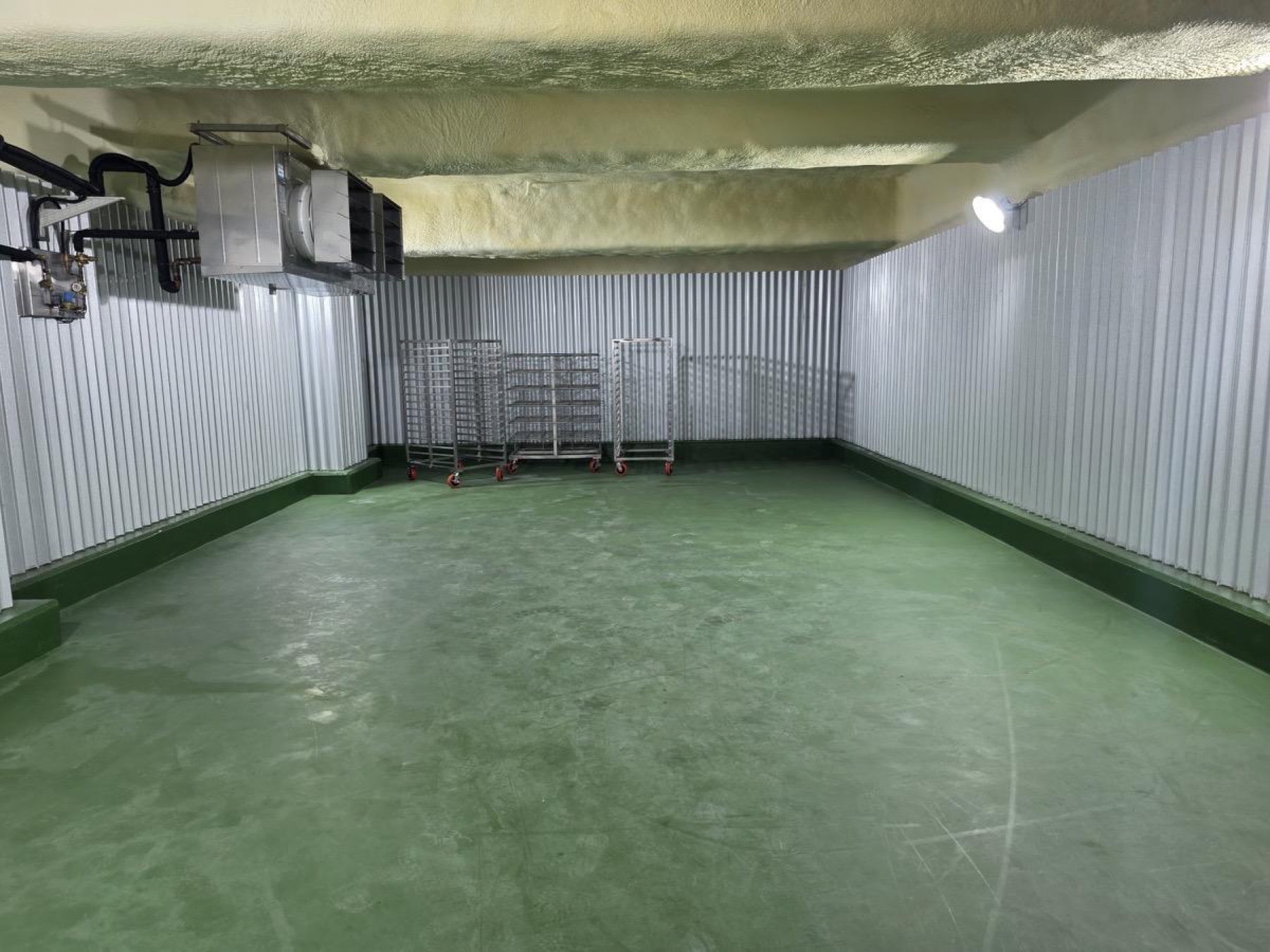
Photo of the B1 refrigerated warehouse provided by Samsam Moolsan (based on provided filename). Actual storage temperatures and history are verified with temperature records.
Photo provided by: Samsam Moolsan · Original file provided by company
Separate Standards for Refrigeration and Freezing
Refrigerated items have heat removed and maintain product-specific low temperatures, while frozen items are managed to prevent repeated thawing and refreezing. Since conditions differ for live products, fresh refrigerated products, processed refrigerated products, and quick-frozen products, do not use a single value as a common standard.
The Codex standard for quick-frozen fish fillets stipulates that the thermal center must reach below -18 degrees Celsius and maintain a deep frozen state during transportation, storage, and distribution.[3] This value is within the scope of the quick-frozen fish fillet standard and is not a universal standard applicable to all seafood and refrigerated products. Actual contractual standards must be determined according to product specifications, labeling, processes, and applicable laws.
Air Temperature and Product Temperature Are Not Considered the Same Value
Vehicle and warehouse air temperatures are environmental records, while product temperatures are values that confirm the product’s state. The two can differ due to door openings, loading, and sensor placement. When interpreting records, sensor placement and calibration status must also be checked. For quick-frozen foods, inspection is advised in the following order: appearance, air temperature records, non-destructive measurement, and product temperature measurement if necessary.[1]
|
Point |
Verification Evidence |
Anomalies and Actions |
|
Raw Material Receipt · Processing Wait |
Receipt time, product condition, measured values |
Separate · Hold lot if standard is deviated |
|
Cooling · Freezing · Storage |
Process completion, continuous records, sensor calibration |
Verify cause of record gaps · alarms |
|
Dispatch · Transport · Delivery |
Vehicle pre-cooling, loading/unloading times, data logger, receipt records |
Withhold judgment if signs of thawing · packaging damage |
Distinguish and Judge Between Record Gaps and Temperature Deviations
A record gap does not mean that a standard has been exceeded, but it indicates a lack of evidence to prove conformity. If an actual deviation or gap is found, do not arbitrarily supplement records or re-cool and approve; instead, separate and hold the lot. Evaluate whether to dispatch, receive, return, or discard based on the maximum temperature, duration, product condition, lot, intended use, and applicable standards.
In the contract, specify item-specific permissible standards, measurement locations/methods, notification times, data retention, evaluation responsibilities, and return procedures. Distinguish between the fact that contractual standards have been exceeded and the final safety/quality judgment. However, the lot must remain on hold until the evaluation is complete and approved.
For supplier evaluation, you can refer to the 12-point checklist for oyster and seafood suppliers. The scope of certification should be separately reviewed using the method for verifying seafood HACCP certificates, and the following lot records should be used for acceptance decisions.
- Dispatch · Loading/Unloading · Arrival times and continuous air temperature records
- Measurement location · equipment identification, calibration status, and product temperature if necessary
- Receipt evidence such as packaging damage, signs of thawing, product condition, and photos
- Lot hold, notification, and final judgment if record gaps · deviations occur
When inquiring about supply to Samsam Moolsan, please provide the product name, refrigeration/freezing status, delivery location, packaging, dispatch/delivery standards, measurement location, data logger requirements, deviation/return procedures, and monthly usage. Trade terms must be confirmed upon inquiry.
Frequently Asked Questions
Does owning a refrigerated truck ensure a cold chain?
No. Vehicle pre-cooling, item standards, loading/unloading times, continuous records, receipt verification, and deviation actions must be linked for each lot.
Are vehicle air temperature and product temperature considered the same value?
They are not the same. Air temperature confirms the surrounding environment, while product temperature confirms the state of the product itself. Check sensor placement and measurement methods together.
Can -18 degrees Celsius be applied to all seafood?
No. The -18 degrees Celsius thermal center standard here is within the scope of the quick-frozen fish fillet standard.[3] For other products, please check the relevant standards and contractual terms.
What if transportation records are interrupted or there’s a temperature deviation?
Distinguish between record gaps and measurement deviations, but hold the lot and evaluate according to time/temperature, condition, and contractual procedures.
What documents should be kept when receiving a delivery?
Link and retain the lot, dispatch/arrival times, air/product temperatures, logger data, packaging/thawing status, and the results of acceptance or hold, along with the responsible party for judgment.
Sources and Verification Standards
[1] Recommended International Code of Practice for the Processing and Handling of Quick Frozen Foods (CXC 8-1976)
https://www.fao.org/fao-who-codexalimentarius/sh-proxy/ar/?lnk=1&url=https%253A%252F%252Fworkspace.fao.org%252Fsites%252Fcodex%252FStandards%252FCXC%2B8-1976%252FCXC_008e.pdf
Definition of cold chain, temperature monitoring records, sensor placement/calibration, product temperature verification at each stage · Verified on 2026-09-27
[2] Sustainable Food Cold Chains
https://openknowledge.fao.org/server/api/core/bitstreams/cf42e3c6-157e-4ea9-8873-8b3cc9242b96/content
Definition and role of an integrated temperature-controlled distribution system from origin to destination · Verified on 2026-09-27
[3] Standard for Quick-Frozen Fish Fillets (CXS 190-1995)
https://openknowledge.fao.org/bitstreams/8e446e3e-175d-46bf-badb-96bc51165952/download
Standard for quick-frozen fish thermal center reaching below -18 degrees Celsius · Verified on 2026-09-27