Oyster & Seafood Glossary
GLOSSARYTerms that appear on product sheets and purchase orders but are rarely explained anywhere. We keep adding entries.
What is IQF (Individually Quick Frozen)? Difference from Block Freezing
IQF stands for Individually Quick Frozen, meaning products where raw materials are rapidly frozen in individual units. The rapid freezing and individual separation mean it’s easy to use only the necessary quantity. IQF alone cannot determine whether a product is raw or cooked, its quality grade, or the presence of glaze.
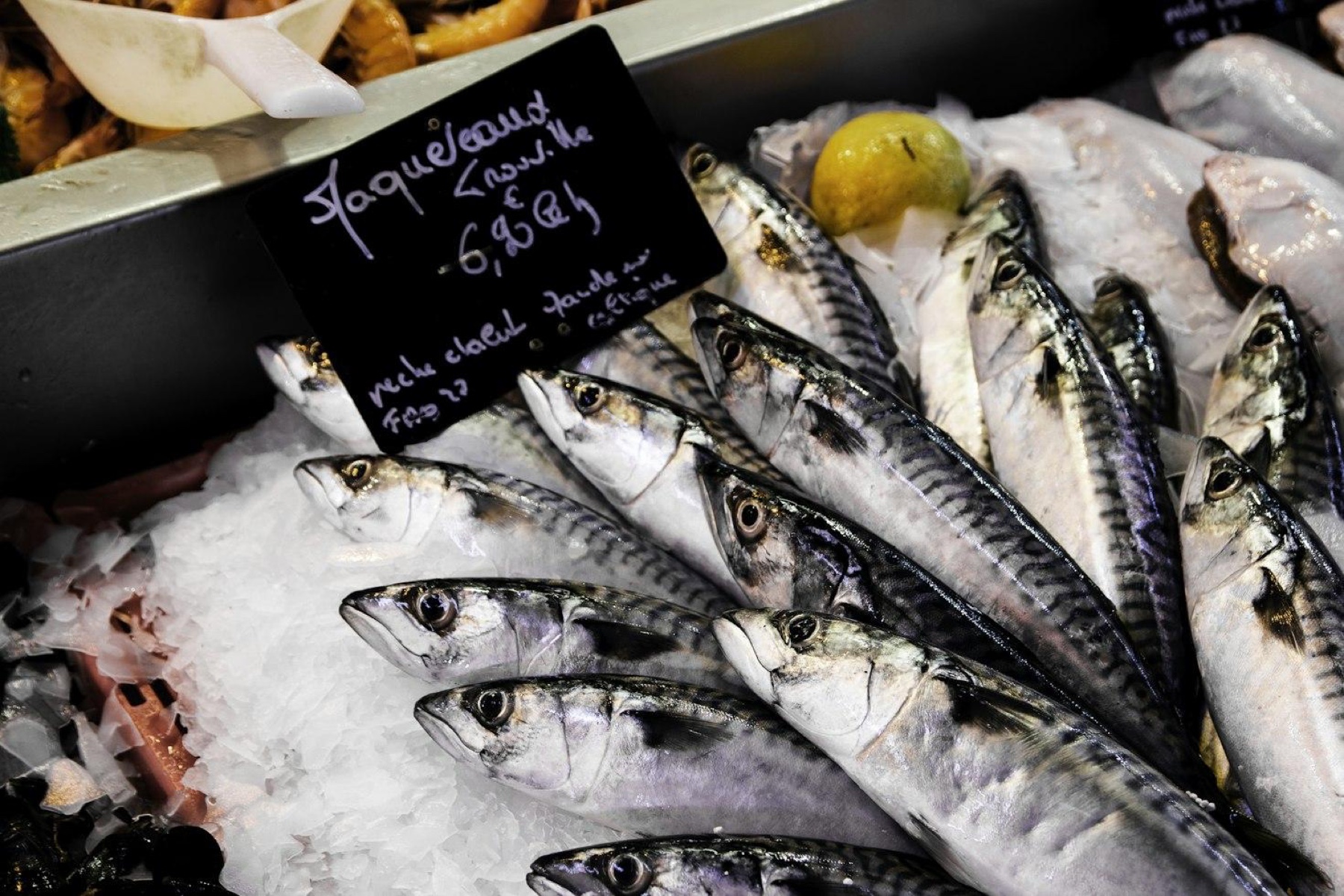
Example of seafood handled on ice. Freezing methods are distinguished by product specifications and records. This is a stock photo for illustrative purposes and does not serve as proof of Samsam Mulsan’s products, facilities, certifications, or Korean-sourced raw materials.
Photo: Samuel C. / Unsplash · License
What does IQF describe?
FAO describes IQF products as frozen items that can be separated into individual units without thawing the entire product.[1] Rapid freezing is advantageous for reducing the impact of large ice crystals and tissue changes, but quality also depends on raw materials, freezing conditions, packaging, storage temperature, and thawing management.[1][2] Therefore, when purchasing, it is important to check not only the finished product specifications but also the processing and storage records.
In purchase orders, ‘quick freezing’ refers to the freezing speed and process conditions, while ‘IQF’ refers to the characteristic of being individually quick-frozen. The method for distinguishing between these two terms can be found in The Relationship Between Quick Freezing and IQF.
How is it different from block freezing?
|
Item |
IQF |
Block Freezing |
|
Freezing Unit |
Individual oyster or small units |
Multiple units in one block |
|
Usage Unit |
Separate only the required amount |
Thaw by block unit |
|
Optimal Operation |
Small, repetitive input, batch variation |
Consistent large batches |
|
Key Checks |
Clumping, size, glaze |
Block weight, thawing time, remaining quantity |
In actual selection, the first consideration is whether the thawing unit matches the quantity used per batch. For example, if 0.8 kg is used each time but the block is 5 kg, a standard for managing the remaining quantity is needed. If the entire 5 kg is used in one batch, it is necessary to calculate whether the convenience of partial use with IQF offsets the cost. You can compare heat treatment states in the IQF, Block, and Cooked Oyster Selection Guide.
Items to check together in IQF specifications
- Raw/cooked status, additional heating instructions, and intended use
- Form and size range (e.g., shucked oysters, half-shell) or number per unit weight
- Declared net weight, presence of glaze, and measurement criteria
- Packaging unit, storage conditions, expiration date
- Acceptable standards for clumping/breakage per lot and acceptance criteria for incoming goods
Since IQF and glazing are separate processes, an ice glaze can be applied after individual quick freezing.[2] In this case, refer to The Meaning of Glazing and Net Weight to distinguish between glaze meltwater and thawing drip, and to differentiate between declared net weight and usable weight/yield after thawing.
During incoming inspection, check for large ice crystals or severe clumping. While this may indicate temperature fluctuations, do not make a definitive judgment based solely on appearance; instead, compare with lot temperature records and contractual standards.
When inquiring about supply from Samsam Mulsan, please provide the product form, raw/cooked status, single-use quantity, monthly usage range, desired packaging unit, and criteria for size, net weight, and glaze assessment. Actual supply specifications and transaction terms must be confirmed upon inquiry.
Frequently Asked Questions
Does the IQF label indicate whether a product is raw or cooked?
No. IQF refers to individual quick freezing, while raw/cooked refers to the heat treatment status. Even cooked products require checking for additional heating instructions and intended use, and the term ‘cooked’ alone should not be taken to mean ‘ready-to-eat’.
Is IQF always better quality than block freezing?
No. IQF is a form advantageous for partial use, not a quality grade. For products of the same specification, compare freezing and storage history, packaging damage, clumping, glaze, and post-thaw condition.
For what usage quantities and batches is IQF worth considering?
It is highly valuable when the single-use quantity is smaller than the entire package or when input quantities frequently vary. Calculating packaging units, block thawing time, remaining quantity management, and discard volume will aid in selection.
Should products with clumped individual pieces be immediately deemed defective?
Do not confirm immediately. Check the extent of clumping, large ice crystals, packaging condition, arrival temperature, and transport records, then make a judgment based on contracted hold/evaluation criteria.
What should be checked in IQF product specifications?
Heat treatment status and heating instructions, form/size, net weight and glaze, and packaging/storage conditions are required. The same drainage/thawing conditions and tolerance should be applied to samples and delivery lots.
Sources and Verification Criteria
[1] Freezing and refrigerated storage in fisheries: Influence of temperature
https://www.fao.org/4/v3630e/v3630e03.htm
Principle of quick freezing, IQF unit freezing, ice crystal/protein changes, and thawing quality · Verified on 2026-09-27
[2] Code of Practice for Fish and Fishery Products (CAC/RCP 52-2003)
https://www.fao.org/input/download/standards/10273/CXP_052e.pdf
Process control for frozen fishery products, purpose of glazing, and principle of net weight exclusion · Verified on 2026-09-27